Results
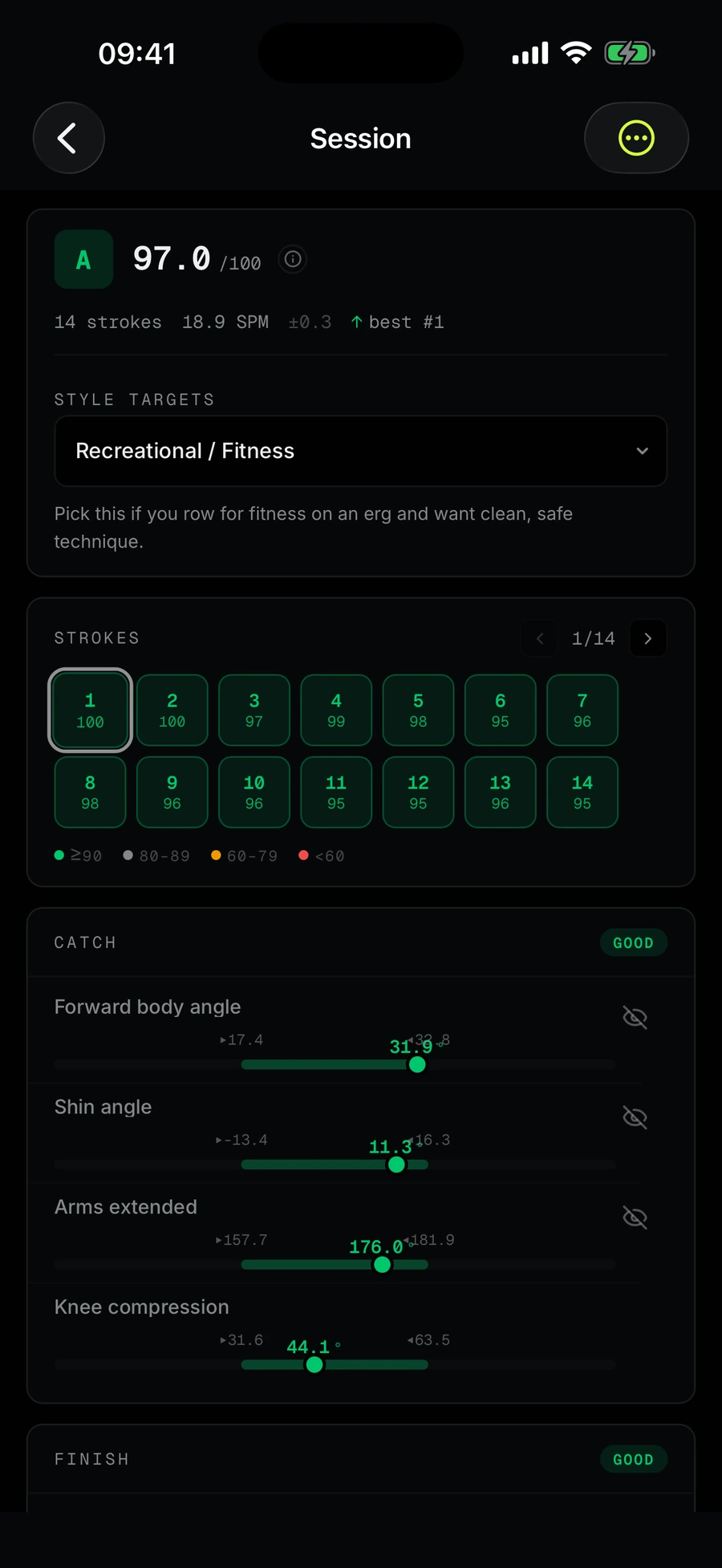
A score, the pillars under it, one thing to fix.
0.0
Grade A · 14 strokes · 18.9 spm
TechniqueA · 97
Consistency0
Efficiency0
One thing to fixmost points at stake
Forward body angle
You 34°Target 17–33°
Grade every stroke.
Film a piece on your phone. Mocta-X grades the catch, drive, finish and recovery of every stroke and tells you the one thing to fix. On the erg, on the water and across the whole crew.
Free plan · no card · try a clip without signing up
A coach can watch one rower at a time. A phone can watch the whole boat. Mocta-X turns every stroke it sees into one clear thing to fix.
Erg, single or eight. Side-on, on the phone you have.
Catch, drive, finish and recovery, each one scored.
Ranked by the points it costs, with a cue to row.
Every seat timed against stroke, every athlete in one room.
Prop the phone side-on and press record. Mocta-X finds the athlete, tracks every major joint through the clip and checks the footage is good enough to grade before it scores a single stroke.
Each stroke is split into catch, drive, finish and recovery and scored against target bands from rowing research. The weights are published, so a grade is never a black box.
The AI coach reads every graded stroke before it says a word. It ranks faults by the points they cost, gives you one to work on with a cue to row by, and cites the stroke and frame behind each claim.
Film the boat side-on and Mocta-X tracks every rower, names each seat and times every catch against Stroke. Coaches see who is early, who is late and who to fix first, with the whole squad's sessions in one film room.
Around the app
A score, the pillars under it, one thing to fix.
Grade A · 14 strokes · 18.9 spm
When your legs, back and arms move fastest.
Every check on its target band, every stroke.
Every stride measured, each metric on its band.
Eight rowers, each catch timed against Stroke.
Every joint, tracked through every stroke.
Six qualities, read from one session.
Reads the whole boat, then names the first fix.
Pair a Concept2 and every piece is logged.
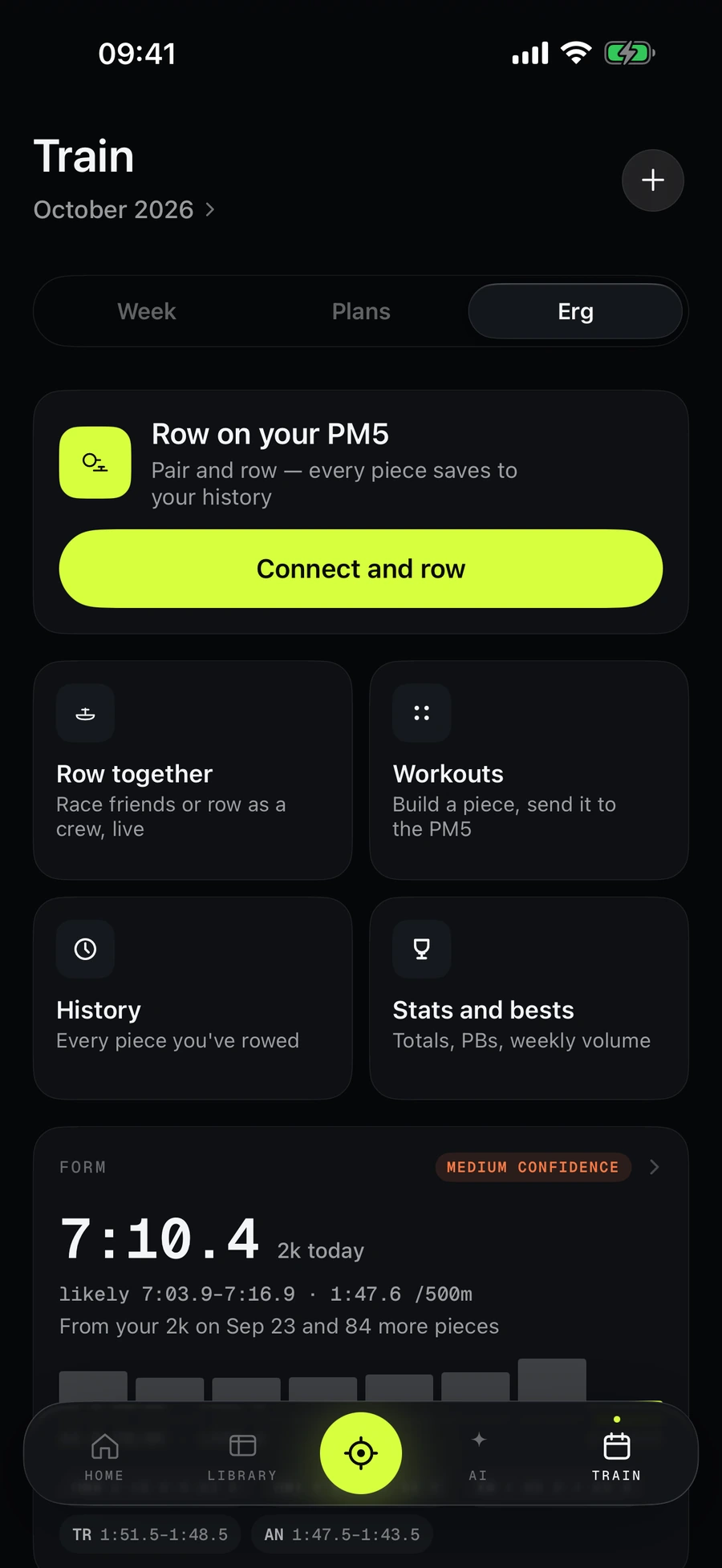
Your next session, streak and last score.
Watch a clip become a grade from the Lock Screen.
Technology
A phone clip goes through the same five steps every time, on our servers, in about the time the piece took to row.
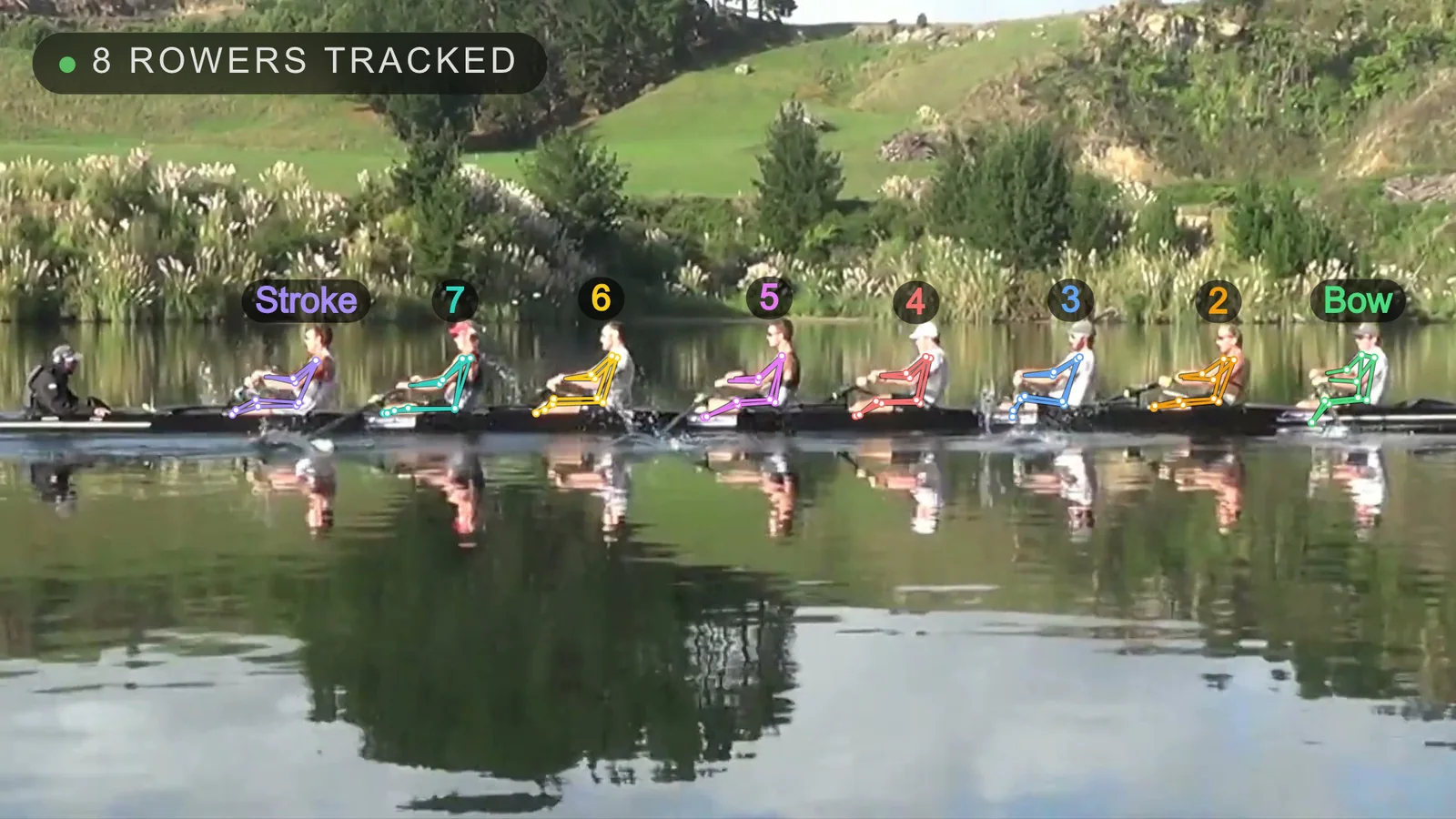 8 rowers · seats named
Finds the athlete, or every rower in the boat, and holds on to each one through the clip.
Zooms in on each athlete and reads every major joint at full resolution, so a sculler filmed from the bank reads as cleanly as an erg.
Corrects every angle for the camera's shape and checks the footage. Too far, too angled or feet out of shot, and it says so instead of scoring.
Splits each stroke into catch, drive, finish and recovery, and scores every check against target bands from rowing research.
The coach queries the graded numbers before it writes, then cites the stroke and the frame behind each claim.
Accuracy
A score is only worth chasing if it means the same thing tomorrow. So we re-grade our own sessions, check the numbers against a lab, and refuse to grade footage we can't read.
The average change when the same clip is graded again. Across all 57 stored rowing sessions, re-grading used to move a score by up to 24 points. Now the worst case is 3.
One runner's vertical oscillation, predicted from a phone clip, against a commercial instrumented-treadmill report.
A clip that fails the check gets what to fix, not a number it can't support. An example of the check; it also looks at the stroke count.
Published equations, fitted to your sex, age, height and pace instead of one band for everyone.
Re-encoding a clip shifted knee angles by 2.2°, so the grading path never re-encodes your video.
The scoring guide lists every check, its target band and how much it counts. No black box.
Internal measurements, not peer-reviewed results. The running cohort is from the Orthopaedic Journal of Sports Medicine, 2023 (n = 860). Methods, sources and limits are on the technology and accuracy page.
Plans
Every plan grades every stroke. Pro adds the AI read, boat syncs and reports. Elite is for coaches and power users.
Get started with motion analysis
For serious athletes and coaches
For coaches, PTs, and power users
FAQ
Anything else? Write to support@cam-lab.org and a person answers, usually within a working day.

Grade every stroke.
Free to start. Film your next piece and see the one thing to fix before the next session.